
Stik
Life & Practice
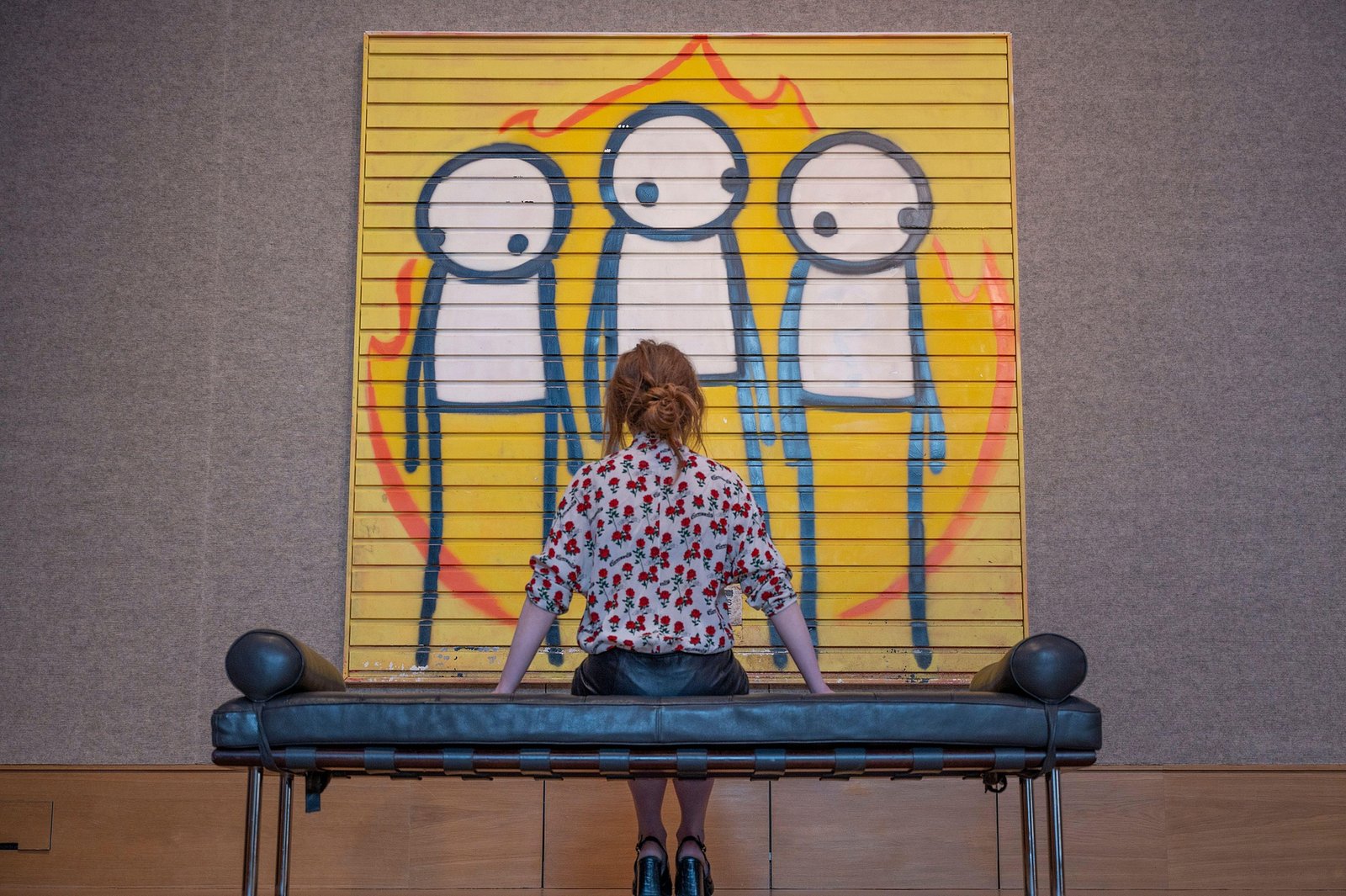
Stik emerged from the streets of London in the early 2000s, developing a visual language defined by extreme reduction and emotional clarity. Working initially in East London, Stik’s early figures appeared on neglected walls and overlooked urban surfaces, often painted without formal permission and at personal risk.
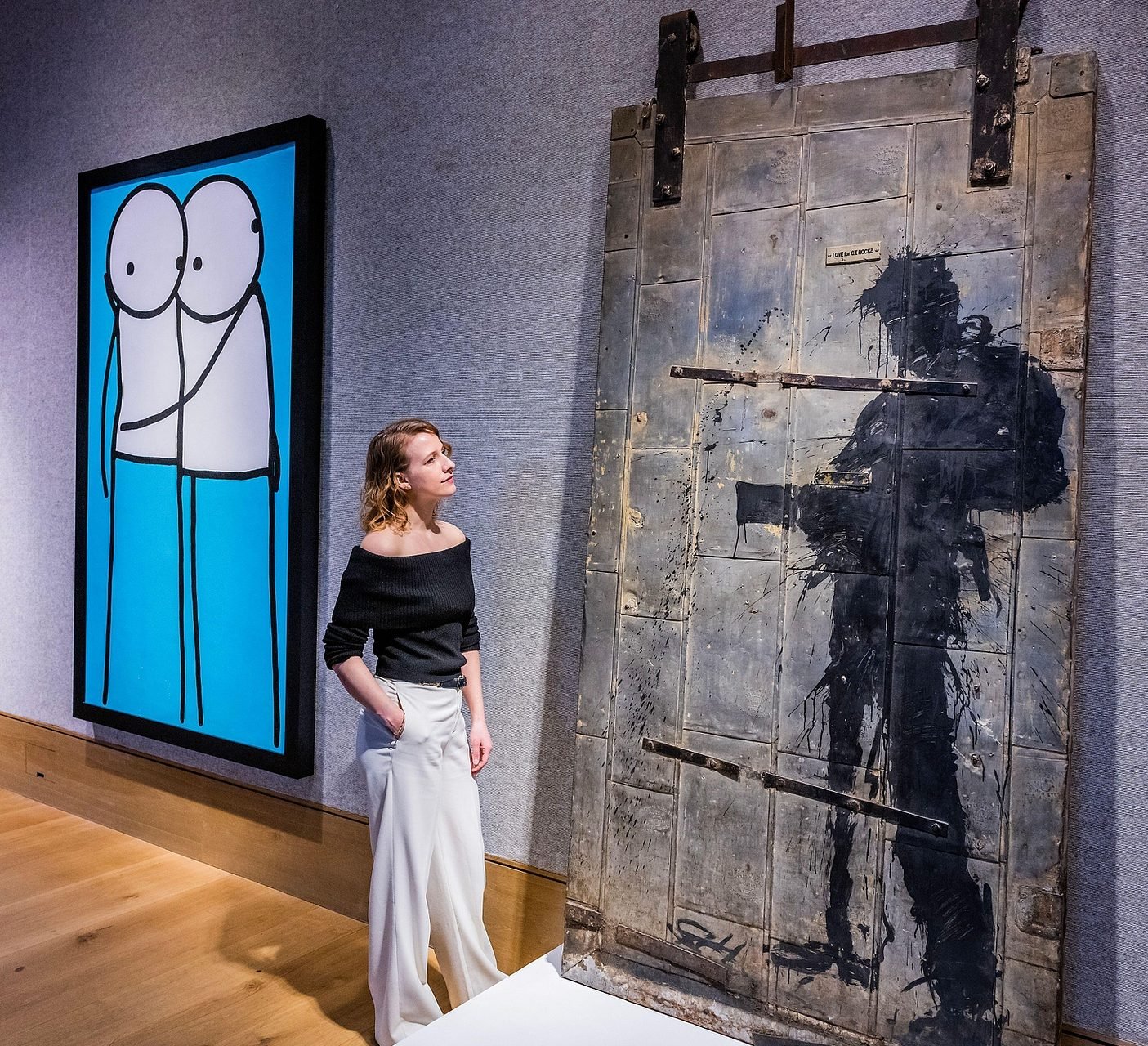
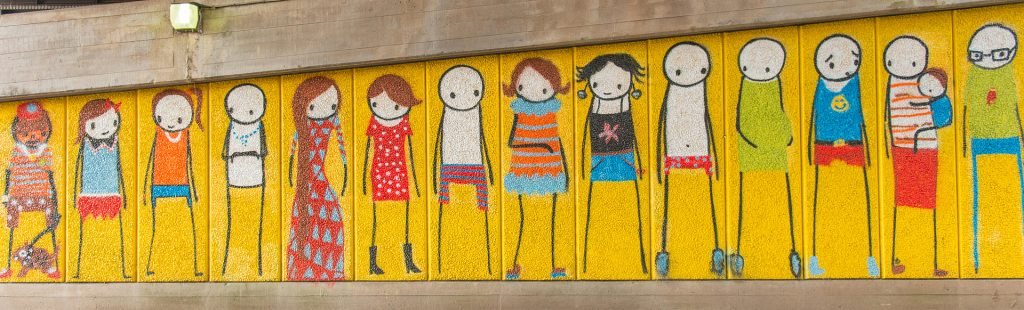
Unlike many contemporaries within urban art, Stik pursued simplicity as discipline rather than branding. His elongated stick figures — composed of minimal lines, subtle posture shifts, and sparse colour — are deceptively restrained. Their emotional resonance lies in gesture and spacing rather than detail. Isolation, solidarity, vulnerability, and protection recur as themes across his work.
Having experienced periods of homelessness in London, Stik’s relationship to public space was both practical and philosophical. The street was not simply a canvas but a lived environment. This proximity shaped the social undertone of his practice, where figures often appear clustered, leaning, or reaching — suggesting communal experience within urban density.
By the 2010s, Stik’s visibility expanded beyond street interventions into studio works, limited editions, and institutional collaborations. His transition from public walls to controlled surfaces retained the clarity of his original language while enabling durability and market structure.
Exhibitions and charitable initiatives further strengthened his profile, positioning him as a distinctive voice within contemporary urban art. Despite increased recognition, the core elements of his practice remain consistent: reduction, balance, and emotional directness.
Stik’s work occupies a defined space within the evolution of street art — neither chaotic nor ornamental, but structured and intentional. Through simplicity, he established a visual identity that is immediately recognisable while retaining conceptual restraint.
Position
Stik occupies a defined position within contemporary urban art, characterised by formal restraint, symbolic clarity, and a market shaped by recognisable imagery rather than stylistic excess.
His practice is best understood through consistency and authorship. Value is supported not by proliferation or novelty, but by a tightly controlled visual language that has achieved broad cultural recognition while remaining materially disciplined.
Career Context
Stik’s career developed through sustained engagement with public space, initially outside institutional frameworks and later in parallel with them. His work gained visibility through repetition and placement rather than scale, establishing a recognisable figure that functions as both image and symbol.
As his profile expanded, Stik maintained a limited formal vocabulary, resisting diversification in favour of refinement. This consistency has underpinned both public recognition and institutional engagement, allowing his work to transition from street intervention to studio production without losing conceptual coherence.
Institutional and civic recognition, including public commissions and permanent installations, has contributed to stabilising his position within contemporary art discourse, reinforcing longevity over trend.
Market History & Auction Behaviour
Auction history demonstrates a market built on recognition, accessibility, and controlled supply.
Early auction appearances established clear price foundations, with demand driven by identifiable imagery and modest scale. Over time, results have shown relative stability, with limited volatility compared to more expressive or materially complex street-art-adjacent markets.
Auction behaviour differentiates strongly between original works and editions, with pricing sensitivity reflecting size, execution, and date. The market is supported by consistent buyer demand rather than speculative spikes, indicating depth rather than momentum.
Current Market Position
Stik currently occupies a liquid and well-defined market tier, appealing to both established collectors and first-time buyers entering contemporary art.
Works that demonstrate clarity of execution, balanced composition, and provenance integrity attract the strongest interest. Larger or atypical works may experience greater price sensitivity, reinforcing the importance of format and scale.
The buyer base is broad but informed, with demand anchored in familiarity and cultural presence rather than institutional scarcity alone.
Risk & Considerations
Considerations in Stik’s market are primarily matters of discernment rather than structural risk.
Given the formal simplicity of the work, quality of execution and compositional balance play an important role in valuation, with well-resolved examples consistently favoured. Clear differentiation between unique works and editions remains relevant, though both categories benefit from an established and well-understood pricing structure.
Overall, the market is supported by familiarity, liquidity, and consistent buyer behaviour. With appropriate attention to format, provenance, and timing, exposure risk remains limited relative to comparable contemporary urban art markets.
LDN Perspective
LDN engages with the market for Stik selectively, informed by auction history, liquidity analysis, and execution viability.
Focus is placed on works that demonstrate strong formal balance, clear provenance, and pricing aligned with historically supported demand. Preference is given to pieces that sit comfortably within established buyer behaviour and long-term market coherence.
Availability & Enquiries
LDN may offer works by Stik privately or through controlled presentation.
For information on current availability or market context, please contact:
All enquiries are handled confidentially.