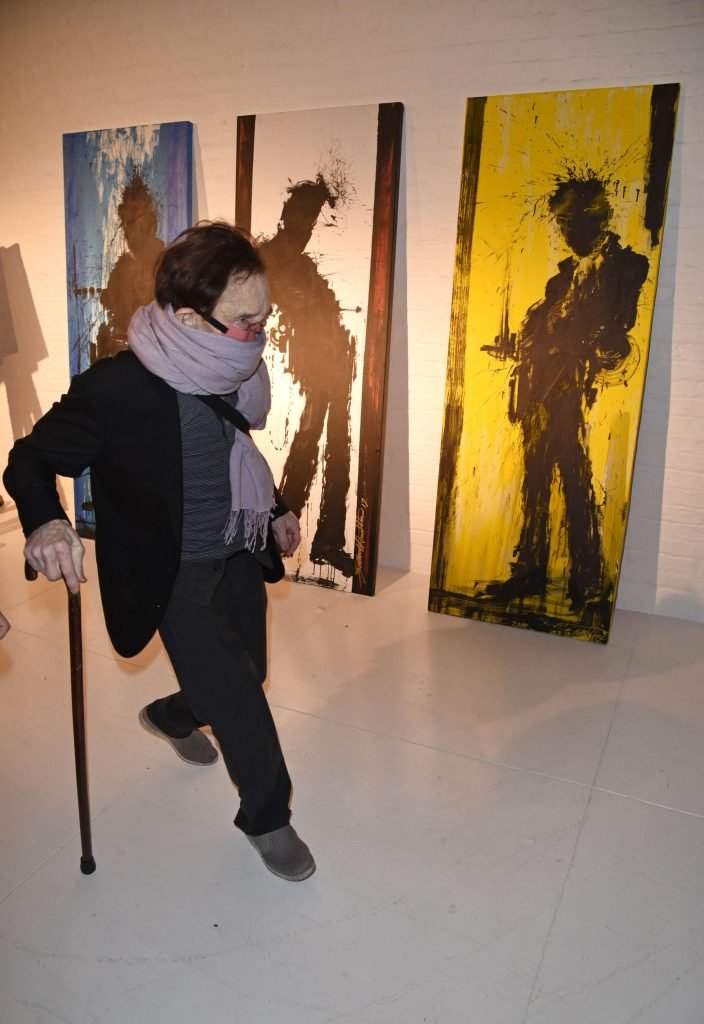

Richard Hambleton
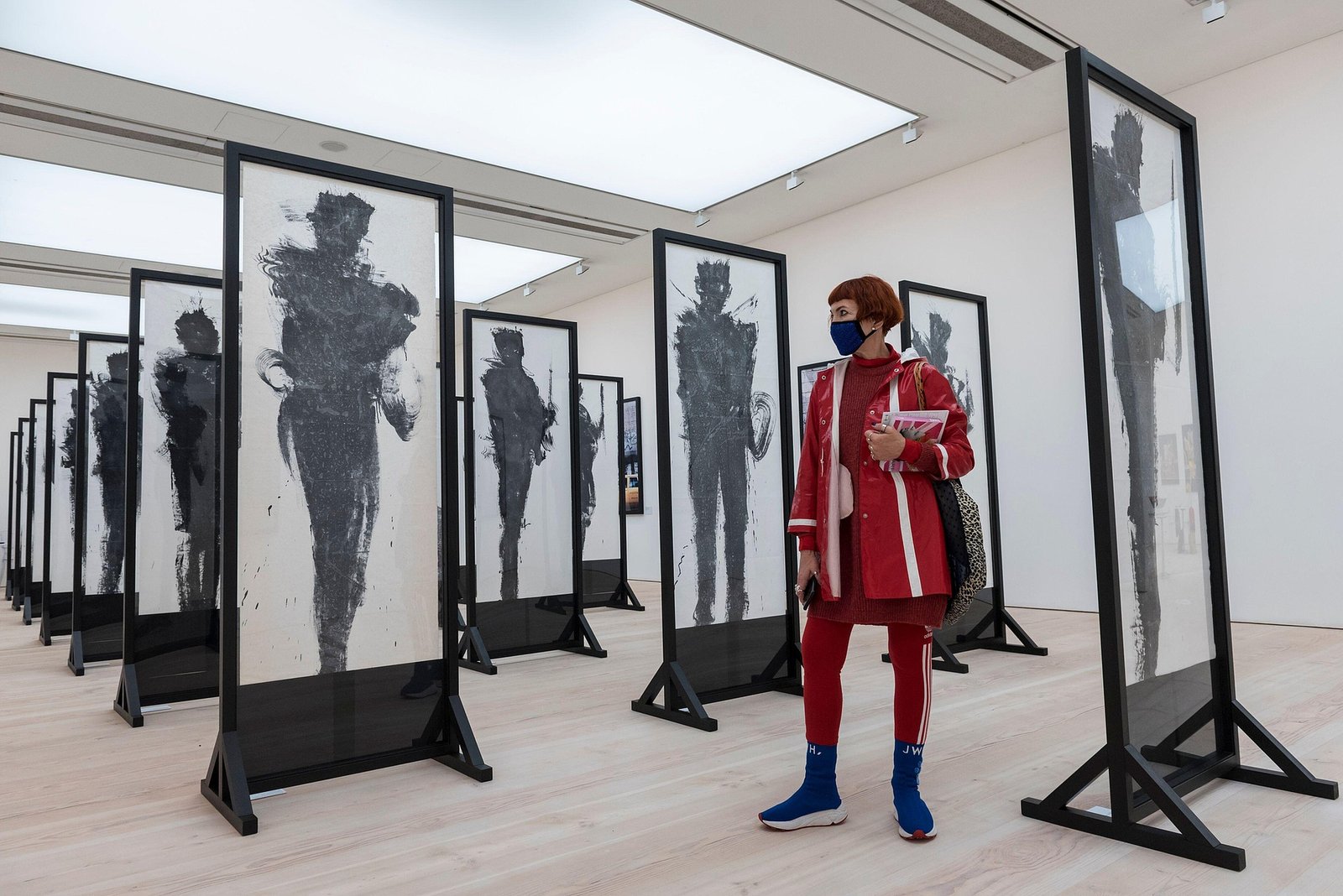
Life, Intervention & Legacy
Richard Hambleton was not merely an early street artist; he was a catalyst in redefining how painting could occupy public space.
Born in Vancouver in 1952, Hambleton emerged during a period when conceptual art and performance were reshaping authorship and audience engagement. From the outset, his instinct was not toward static objects but toward encounter. The city itself became his theatre.
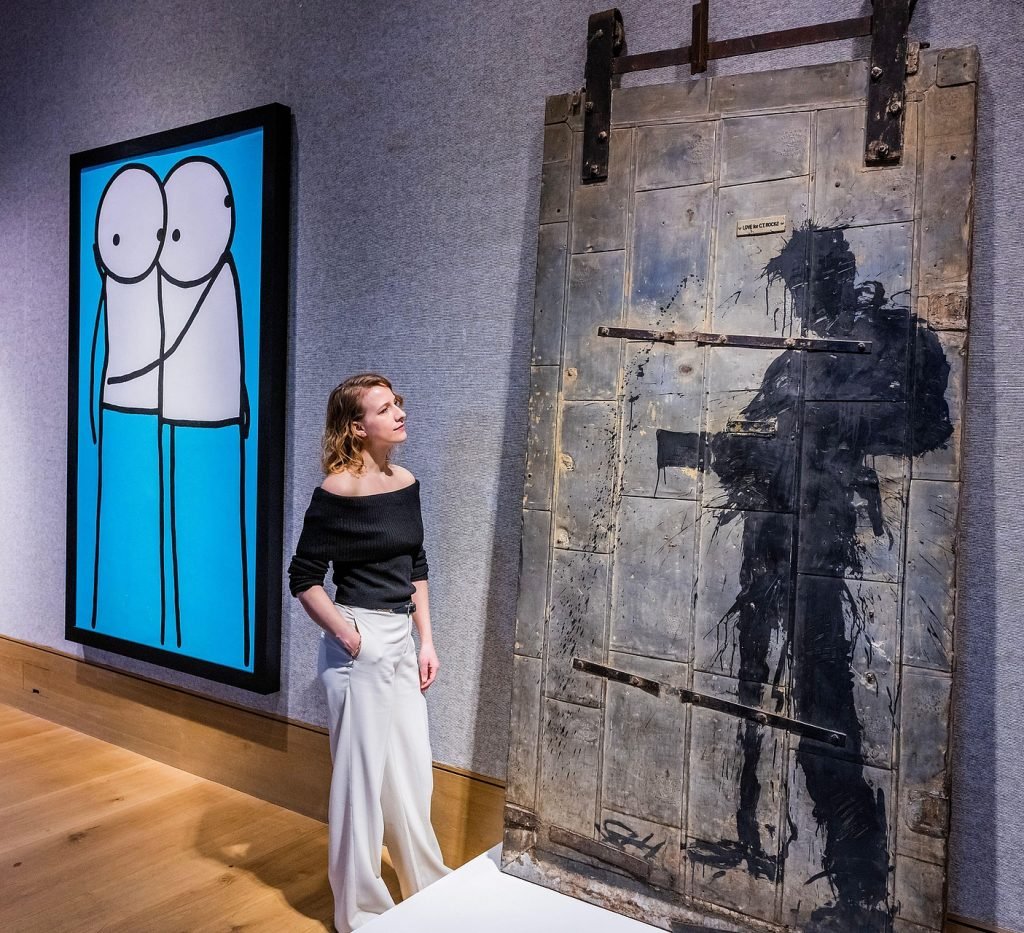
In the late 1970s, he initiated what would become the Mass Murder series — life-sized painted silhouettes resembling crime-scene bodies, installed directly onto urban pavements. These interventions were not framed as artworks; they were discoveries. Passersby encountered them unexpectedly, often with alarm. Hambleton understood that psychological impact was as significant as form. Presence mattered more than polish.
Relocating to New York at the dawn of the 1980s intensified this direction. The Lower East Side provided both volatility and scale. Here, Hambleton developed the Shadowman figures that would define his career: stark, gestural black silhouettes appearing suddenly on walls, alleyways, and abandoned buildings. These works were neither graffiti nor mural in the contemporary sense. They were apparitions — theatrical and unsettling.
Unlike later urban artists who built repeatable visual brands, Hambleton resisted commodification. His figures were intentionally unstable, designed to feel temporary and atmospheric. They inhabited shadow rather than spotlight.
By the mid-1980s, his presence intersected with the broader downtown New York art movement, a period also associated with figures such as Jean-Michel Basquiat and Keith Haring. While contemporaries increasingly entered institutional frameworks, Hambleton’s relationship with visibility remained ambivalent. The street offered autonomy; the studio offered permanence.
Throughout the late 1980s and 1990s, he translated his silhouetted language onto canvas and panel. The Marlboro rider series and later studio works preserved the psychological immediacy of his street interventions while allowing greater material control. The figure remained central — elongated, shadowed, archetypal.
Hambleton’s career did not follow a conventional trajectory. Periods of recognition alternated with retreat. Market cycles shifted around him. Yet the structural clarity of his practice endured: figure as apparition, surface as stage, darkness as medium.
His influence on contemporary urban art is foundational not because of stylistic imitation, but because of conceptual precedent. Before the market formalised “street art” as a category, Hambleton had already demonstrated that public space could function as a site of theatrical painting.
He passed away in 2017. What remains is a body of work that occupies a singular position between performance, painting, and intervention — a practice that expanded the territory of contemporary art and continues to anchor his historical significance.
Position
Richard Hambleton occupies a distinct position within late 20th-century urban and contemporary art, defined by early conceptual clarity, cultural immediacy, and a legacy shaped as much by influence as by formal output.
His work is best understood not simply as street art, but as a precursor to the movement’s critical and market recognition — one whose value is grounded in historical primacy, visual authority, and enduring cultural resonance rather than volume or stylistic proliferation.
Career Context
Hambleton emerged in the late 1970s and early 1980s at a moment when public space, performance, and intervention were being actively redefined by artists working outside institutional frameworks. His practice developed through direct engagement with the urban environment, producing images that were confrontational, theatrical, and psychologically charged.
While contemporaries would later build structured careers around street practice, Hambleton’s trajectory remained less conventional. Periods of intense visibility were followed by extended absences from the formal art market, resulting in a body of work that is historically significant but unevenly distributed.
Institutional recognition, while limited during his lifetime, has increased posthumously through ongoing reassessment of Hambleton’s role in shaping a visual language later adopted and commercialised by others.
This reassessment continues to evolve, with a ten-year memorial film scheduled for release, contributing to broader cultural and historical reflection on his work and influence. Such developments reinforce Hambleton’s position within art history rather than signalling short-term market momentum, and form part of the longer process through which his legacy is understood.
Market History & Auction Behaviour
Auction history provides essential insight into Hambleton’s market.
Early auction appearances were sporadic, reflecting both the scarcity of authenticated works and the market’s initial difficulty in categorising his practice. As scholarship and provenance clarity improved, auction results began to demonstrate clearer differentiation between historically significant periods and later or secondary material.
The strongest auction performance is consistently associated with works that retain direct lineage to Hambleton’s most recognised interventions — pieces that preserve immediacy, scale, and visual tension. These works tend to attract informed buyers with an understanding of his foundational role, rather than speculative interest.
Overall, auction behaviour indicates a market characterised by controlled supply and supported by selective demand rather than volume-driven trading.
Current Market Position
Hambleton’s current market position is defined by historical importance coupled with selective liquidity.
Demand is strongest for works that clearly relate to his most influential period and demonstrate authenticity in both execution and intent. Smaller, derivative, or less resolved works show materially different behaviour, reinforcing the importance of discernment at entry.
Buyers are typically collectors with a broader understanding of post-war and contemporary art history, rather than trend-driven participants. As a result, pricing tends to reflect contextual value rather than short-term momentum.
Risk & Considerations
Considerations in Hambleton’s market are primarily matters of selectivity and attribution rather than systemic risk.
Value sensitivity is most closely linked to period, execution, and provenance clarity. Works that demonstrate clear lineage to Hambleton’s most historically significant interventions and retain strong visual authority continue to be favoured, particularly where documentation and condition are well established.
As with many historically influential practices, careful distinction between core works and peripheral material remains important. With informed selection and appropriate attention to provenance and context, exposure risk is contained and consistent with other markets driven by historical primacy rather than volume.
LDN Perspective
LDN engages with the market for Richard Hambleton selectively, guided by auction history, contextual understanding, and execution viability.
Focus is placed on works that align with historically supported demand, demonstrable relevance to Hambleton’s most influential period, and defensible pricing. Preference is given to pieces where provenance clarity and condition support long-term market coherence.
Availability & Enquiries
LDN may offer works by Richard Hambleton privately or through controlled presentation.
For information on current availability or market context, please contact:
All enquiries are handled confidentially.