
The LDN Guide to Investing in Fine Art
Understanding Value, Scarcity, and Strategy in the Global Art Market In recent decades, fine art has increasingly emerged as a

Ownership History, Authenticity, and Market Confidence
Within the art market, few concepts carry as much importance as provenance. At its most basic level, provenance refers to the documented history of an artwork’s ownership—from the moment it leaves the artist’s studio through every collector, gallery, exhibition, or institution that subsequently holds it. Yet in practice, provenance represents far more than a simple chain of possession. It forms the foundation upon which authenticity, historical significance, and financial value are established.
For collectors and investors alike, provenance provides confidence. An artwork that can be traced through reputable galleries, established collections, or institutional exhibitions carries a narrative that situates the object within a wider cultural and historical context. This documentation not only confirms the legitimacy of the work but also demonstrates how it has been recognised and circulated within the art world over time.
In the secondary market—where artworks reappear years or even decades after their initial sale—provenance often becomes the primary mechanism through which value is assessed. When collectors evaluate a work, they are rarely considering the visual object alone. They are also examining the historical record that accompanies it: where it has been exhibited, who has owned it, and how it has been discussed within academic or curatorial contexts.
Auction houses such as Christie’s and Sotheby’s frequently place significant emphasis on provenance within their catalogues. A well-documented ownership history can elevate a work beyond its purely aesthetic qualities by linking it to notable collectors, respected dealers, or important exhibitions. In many cases, these connections contribute directly to the market perception of a piece, reinforcing both authenticity and desirability.
One of the most important functions of provenance is its role in authentication. The art market has long faced challenges related to forgery and misattribution. A clear ownership record helps mitigate these risks by providing verifiable documentation that supports an artwork’s origin. This might include gallery invoices, exhibition catalogues, archival photographs, or letters between collectors and dealers.
For works by historically significant artists, provenance may also connect the artwork to the broader narrative of art history. For example, a painting that once formed part of a renowned private collection or appeared in a major museum exhibition carries an added layer of cultural legitimacy. These connections can strengthen both scholarly interest and collector demand, reinforcing the work’s position within the market.
The importance of provenance becomes particularly evident when it is absent. An artwork that enters the market without a clear ownership record often raises questions. Without documentation confirming where the work has been and who has owned it, collectors may hesitate to proceed with a purchase. In such cases, uncertainty can significantly affect value, as buyers factor potential risk into their assessment of the work.
This is why serious collectors and professional dealers place considerable emphasis on documentation. When artworks change hands through reputable galleries or established private brokers, records of the transaction are carefully preserved. Over time, these documents accumulate to form a detailed ownership history that travels with the artwork throughout its lifetime.
Provenance can also reveal how an artist’s reputation has evolved. Works that have passed through respected collections often reflect early recognition by knowledgeable collectors or curators. These early endorsements sometimes become part of the artwork’s narrative, illustrating how the artist’s significance was perceived at different moments in time.
Museums and cultural institutions likewise play a central role in establishing provenance. When artworks are exhibited by respected institutions such as the Tate or the Museum of Modern Art, they acquire an additional layer of credibility. Institutional exhibition records become part of the artwork’s permanent documentation, strengthening its scholarly and market standing.
For investors, provenance functions as a form of risk management. Artworks with comprehensive documentation are easier to authenticate, easier to insure, and ultimately easier to resell. When the time comes to place a work back into the market, a strong provenance reassures prospective buyers that the piece has been responsibly stewarded throughout its history.
In practical terms, provenance documentation may take many forms. Gallery receipts, auction catalogues, estate records, photographs of the work installed in private collections, and correspondence between collectors all contribute to the historical chain. Each document adds a layer of verification that strengthens the artwork’s legitimacy within the marketplace.
The importance of provenance has only grown in recent decades as the global art market has expanded. With collectors operating across multiple continents and artworks frequently crossing international borders, documentation has become essential in maintaining market transparency. Digital archives, catalogue raisonnés, and artist foundations now play an increasingly important role in recording and verifying these ownership histories.
Ultimately, provenance serves as the bridge between an artwork and its historical journey through the world. It tells the story of how the piece moved through collections, how it was perceived by scholars and institutions, and how it entered the broader narrative of art history.
For collectors building serious collections, provenance is not merely an administrative detail—it is one of the most powerful safeguards of value. An artwork supported by strong documentation carries with it the confidence of history, ensuring that its authenticity, cultural significance, and market credibility remain intact for generations to come.
If you are interested in acquiring works discussed in this article, or wish to explore the sale or valuation of artworks from your own collection, the team at LDN provides discreet advisory and brokerage services within the secondary art market. For enquiries, valuations, or consignments, please contact us at enquiries@londonart.art or valuations@londonart.art.
Understanding Value, Scarcity, and Strategy in the Global Art Market In recent decades, fine art has increasingly emerged as a
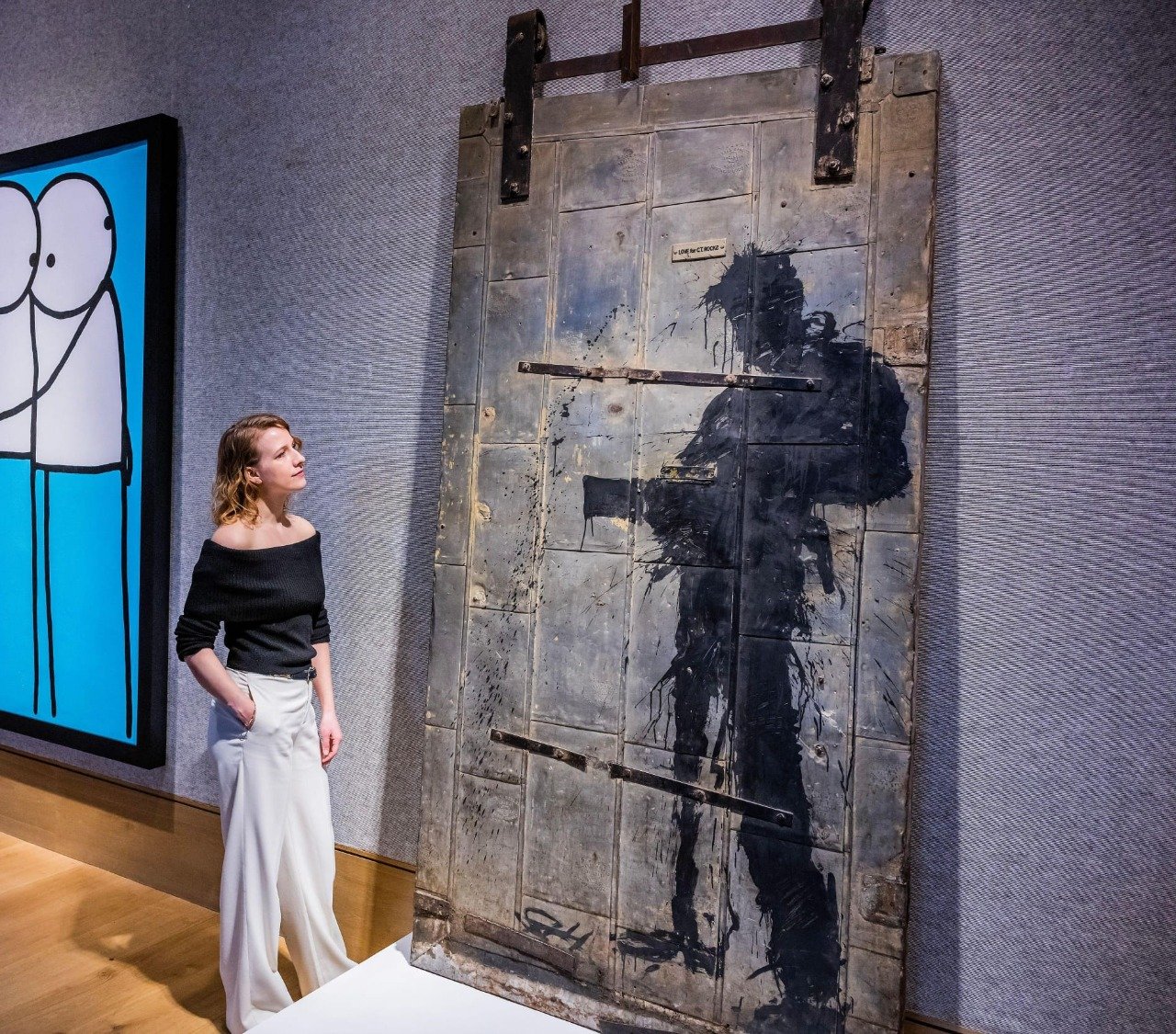
?Scarcity, Cultural Influence, and Collector Demand Within the history of late twentieth-century urban art, few figures occupy as enigmatic and