
The LDN Guide to Investing in Fine Art
Understanding Value, Scarcity, and Strategy in the Global Art Market In recent decades, fine art has increasingly emerged as a
?Scarcity, Cultural Influence, and Collector Demand
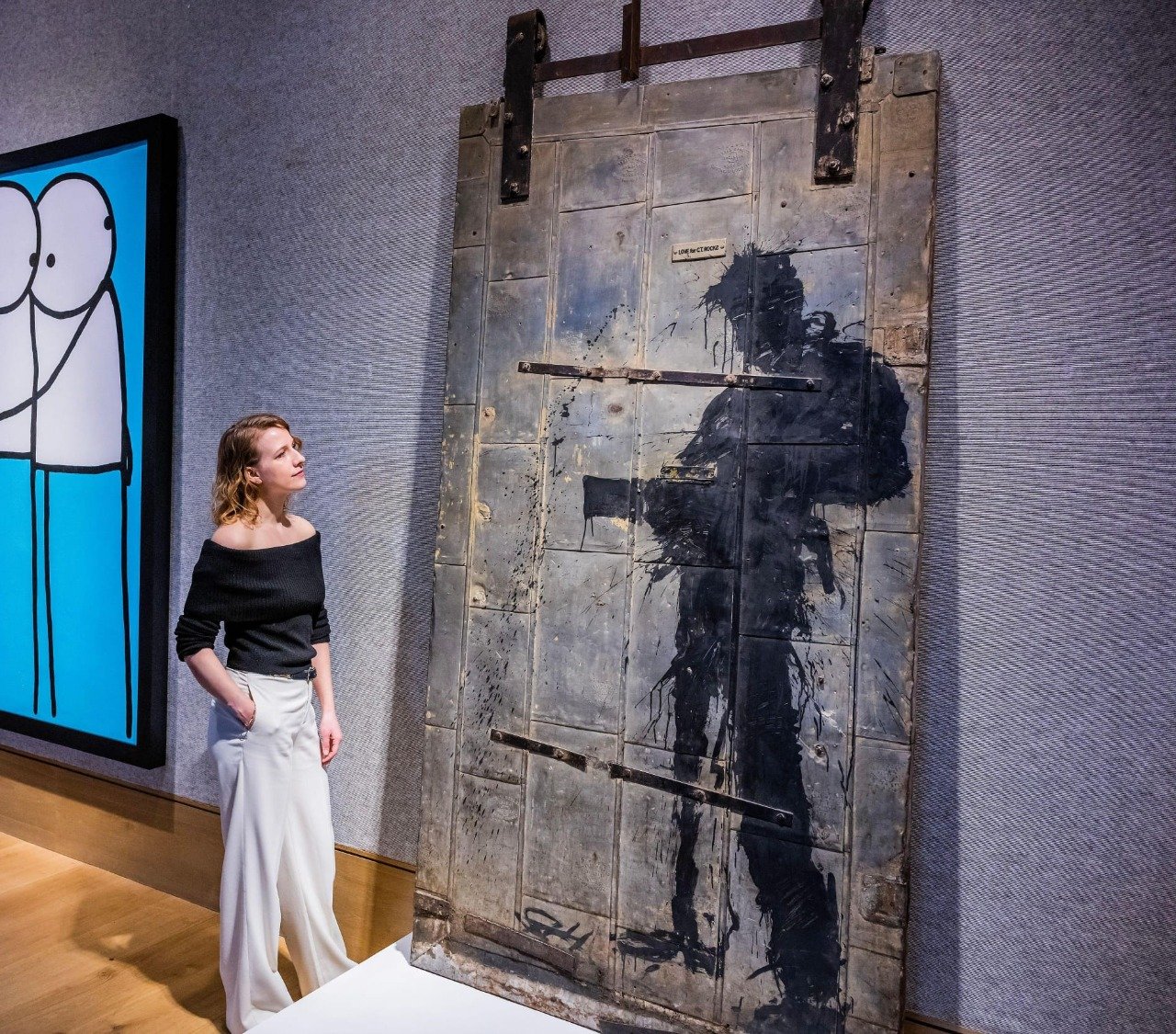
Within the history of late twentieth-century urban art, few figures occupy as enigmatic and influential a position as Richard Hambleton. Often described as one of the earliest pioneers of street art, Hambleton’s work emerged during a period when the boundaries between public intervention and contemporary fine art were rapidly dissolving. Today, his legacy is increasingly recognised not only for its cultural significance but also for its position within the evolving secondary market for post-graffiti art.
Born in 1952 in Vancouver, Hambleton developed an early fascination with performance, theatre, and the psychological effect of imagery in public environments. This interest in theatricality would later become central to his artistic practice. Before moving to New York, he experimented with large-scale street installations that disrupted everyday urban life. His Mass Murder series—painted crime-scene silhouettes appearing across city streets—blurred the line between performance art and public intervention.
Hambleton arrived in New York in the late 1970s, at a time when the city’s downtown art scene was undergoing a profound transformation. Industrial spaces, abandoned buildings, and subway networks had become canvases for a generation of artists seeking new ways to engage with the city itself. Within this environment, Hambleton developed the body of work that would ultimately define his legacy: the Shadowman series.
The Shadowman figures—large, black silhouettes painted on walls across Manhattan—were deliberately unsettling. Positioned in alleyways, doorframes, and unexpected corners, they appeared suddenly within the urban landscape, often startling pedestrians who encountered them at night. Hambleton understood that the city itself could function as a stage, and his figures became actors within that environment.
This period placed Hambleton alongside other emerging artists who would later become defining figures of the era, including Jean-Michel Basquiat and Keith Haring. While Basquiat and Haring rapidly entered the gallery system and achieved early institutional recognition, Hambleton remained somewhat removed from the commercial art world. His work retained a raw immediacy that reflected its street origins, and his personal trajectory was marked by periods of withdrawal from the mainstream art market.
Ironically, this distance from commercial structures would later contribute to the rarity of his surviving works. Many of Hambleton’s most iconic interventions existed only temporarily in public space. The Shadowman figures were often painted over, removed, or lost to the changing architecture of the city. As a result, the number of surviving studio works and documented pieces is relatively limited when compared to many of his contemporaries.
For collectors, this scarcity has become one of the defining characteristics of the Hambleton market. Works that clearly relate to the Shadowman imagery—particularly those with strong provenance and exhibition history—are increasingly sought after within the secondary market. As collectors have begun reassessing the origins of street art and urban intervention, Hambleton’s role as a foundational figure has received renewed scholarly and market attention.
Institutional recognition has also contributed to this reassessment. Exhibitions and publications examining the early street art movement have positioned Hambleton alongside artists whose influence reshaped contemporary visual culture. His work is now understood not simply as graffiti or street imagery, but as part of a broader conceptual shift in how artists engage with public space.
This historical re-evaluation has had measurable effects on collector demand. As interest in the early history of street art continues to grow, works by artists associated with the movement’s origins have become increasingly desirable. Collectors who once focused primarily on Basquiat or Haring have begun exploring the broader ecosystem of artists who shaped the downtown New York scene of the late 1970s and early 1980s.
Within this context, Hambleton occupies a unique position. His work carries both the cultural mythology of street art and the visual immediacy of expressionist painting. The dark, gestural figures that populate his canvases maintain the tension and theatricality of the original street interventions, while functioning as fully realised studio works in their own right.
For investors and collectors alike, Hambleton represents an artist whose historical importance is still undergoing broader recognition. As scholarship around the origins of street art continues to develop, the artists who first transformed urban space into a site of artistic experimentation are increasingly viewed as key figures within late twentieth-century art history.
Today, Richard Hambleton’s work stands at the intersection of mythology and market reality. His Shadowman figures—once fleeting presences on the streets of New York—have become enduring symbols of a moment when art escaped the gallery and entered the city itself. In the years ahead, as institutions and collectors continue to reassess this pivotal era, Hambleton’s contribution is likely to remain central to the story of how street art reshaped contemporary culture.
If you are interested in acquiring works discussed in this article, or wish to explore the sale or valuation of artworks from your own collection, the team at LDN provides discreet advisory and brokerage services within the secondary art market. For enquiries, valuations, or consignments, please contact us at enquiries@londonart.art or valuations@londonart.art.
Understanding Value, Scarcity, and Strategy in the Global Art Market In recent decades, fine art has increasingly emerged as a

Ownership History, Authenticity, and Market Confidence Within the art market, few concepts carry as much importance as provenance. At its