

Adrian Heath
Life & Practice
Adrian Heath was a central figure in the development of post-war British abstraction. Born in Burma in 1920 and educated in England, Heath’s early life was marked by wartime experience; he was captured during the Second World War and spent several years as a prisoner of war. It was during captivity that he began to draw seriously, an experience that shaped both his discipline and his commitment to painting.
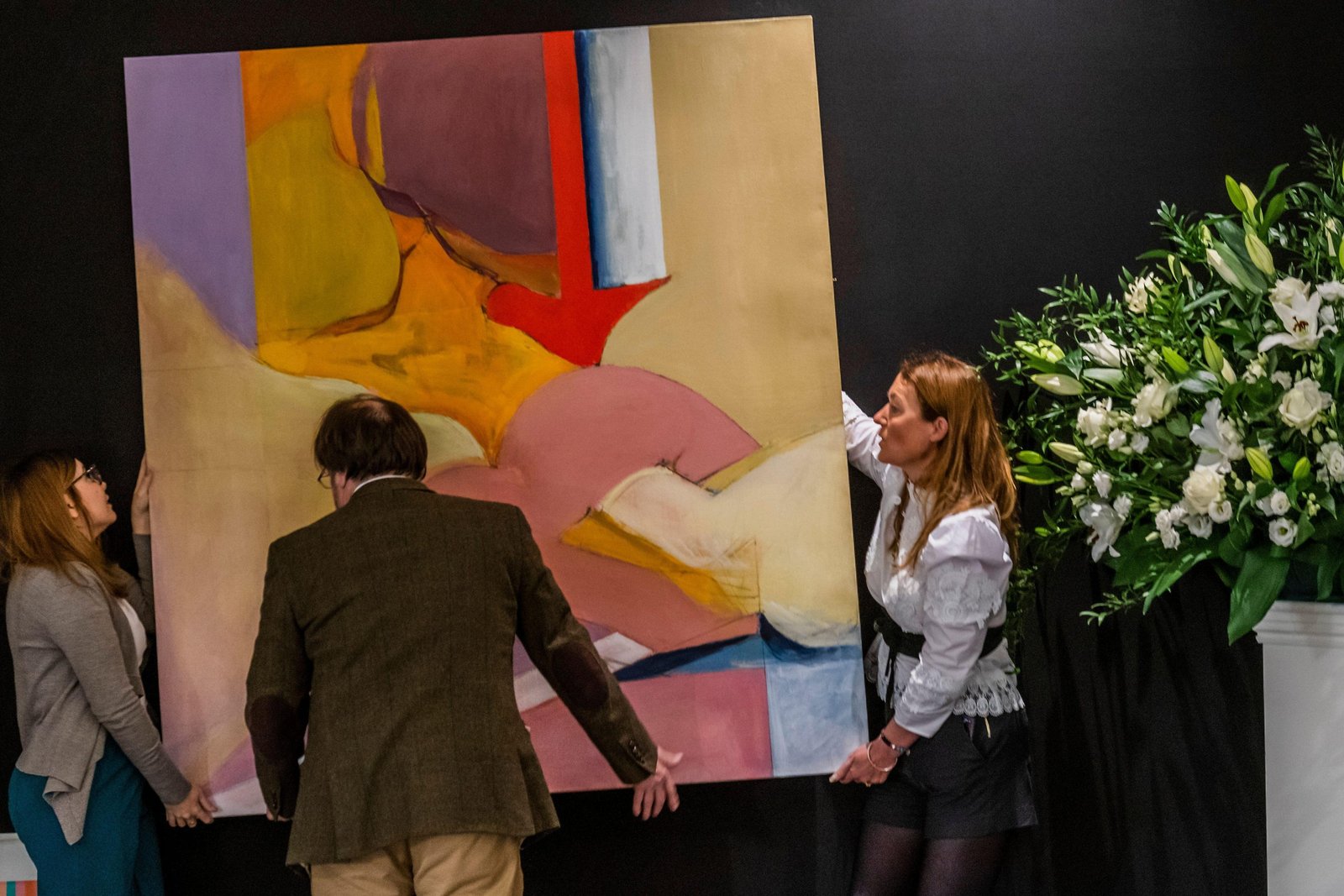
After the war, Heath became closely associated with the emerging abstract movement in Britain. He rejected figuration in favour of structural composition, exploring rhythm, spatial balance, and chromatic tension. His work aligned with the growing international dialogue around modernism while retaining a distinctly British sensibility.
Throughout the 1950s and 1960s, Heath exhibited widely and became involved in artist-led initiatives that promoted abstraction within a still largely figurative British art environment. His compositions often feature interlocking planes, softened geometry, and a restrained yet deliberate colour palette. Rather than gestural expressionism, Heath pursued order and equilibrium.
Teaching and advocacy also formed part of his contribution to post-war art in Britain. He was instrumental in fostering recognition for abstract painters during a period when the movement was still consolidating institutional support.
Heath’s practice remained consistent across decades: measured, resolved, and structurally focused. His work reflects a sustained engagement with the formal concerns of modernism — space, harmony, and compositional clarity — rather than stylistic volatility.
He died in 1992, leaving a body of work that holds a secure position within the narrative of British post-war abstraction, recognised for both its compositional intelligence and its historical importance.
Position
Adrian Heath occupies a considered position within post-war British abstraction, defined by formal clarity, intellectual restraint, and sustained engagement with modernist principles.
His work is best understood through its dialogue with European modernism and the British abstract tradition, with value anchored in coherence of practice and historical relevance rather than expressive excess or episodic visibility.
Career Context
Heath’s career developed in close proximity to the emergence of post-war abstraction in Britain, informed by European modernist ideas and shaped through sustained studio practice rather than public spectacle. His work reflects a commitment to structure, balance, and colour relationships, evolving through measured shifts rather than abrupt stylistic changes.
Institutional engagement and critical recognition positioned Heath within a network of British abstract artists whose contributions were foundational rather than headline-driven. This context continues to inform how his work is interpreted, situating it within a lineage of disciplined modernist practice.
The relative consistency of his output, coupled with a lack of sensationalism during his career, has resulted in a market that values historical grounding and intellectual continuity.
Market History & Auction Behaviour
Auction history for Heath reflects a measured and stable market.
Early auction appearances established modest but consistent pricing, with subsequent results demonstrating gradual consolidation rather than volatility. Auction data indicates a market that differentiates carefully by period, scale, and chromatic resolution, with stronger performance associated with works that demonstrate compositional balance and confidence.
Repeat sales behaviour suggests informed participation by buyers familiar with British abstraction, supporting liquidity without reliance on speculative momentum.
Current Market Position
Heath currently sits within a quietly established market tier, appealing to collectors with an interest in post-war British abstraction and modernist continuity.
Works that exhibit formal resolution, assured colour relationships, and clear provenance attract the strongest interest. Smaller or less resolved works may show greater price sensitivity, reinforcing the importance of selection rather than breadth.
The buyer base is typically experienced and academically informed, contributing to market stability over time.
Risk & Considerations (calibrated)
Considerations in Heath’s market are primarily matters of quality selection rather than structural risk.
Value is most closely influenced by compositional strength, period relevance, and condition. Well-resolved works with clear provenance and confident execution continue to perform consistently within established pricing parameters.
As with many modernist abstract markets, discernment around scale and quality is important. With appropriate selection and attention to context, exposure risk remains limited and comparable to other historically grounded post-war practices.
LDN Perspective
LDN engages with the market for Adrian Heath selectively, guided by auction history, contextual understanding, and execution viability.
Focus is placed on works that demonstrate formal resolution, defensible pricing, and alignment with historically supported demand within British abstraction. Preference is given to pieces where quality and provenance support long-term market coherence.
Availability & Enquiries
LDN may offer works by Adrian Heath privately or through controlled presentation.
For information on current availability or market context, please contact:
All enquiries are handled confidentially.